
Vacant vs. Occupied Home Staging: What’s the Difference and Which Is Better?

When preparing a home for sale, one of the most common questions we get is whether to stage a vacant home or work with the existing furniture in an occupied property. While both options exist, they create very different results—and in our experience, the difference is significant.
What is vacant home staging?
Vacant staging is when a home is completely empty and professionally staged with furniture, artwork, and accessories. Every piece is intentionally selected to fit the home’s layout, price point, and target buyer.
The result is a cohesive, design-forward space that feels elevated, inviting, and move-in ready.

What is occupied staging?
Occupied staging works with the homeowner’s existing furniture and decor, making adjustments to improve presentation. This can include rearranging furniture, removing items, and adding light styling touches.
While it can help improve a space, it is ultimately limited by what is already in the home.
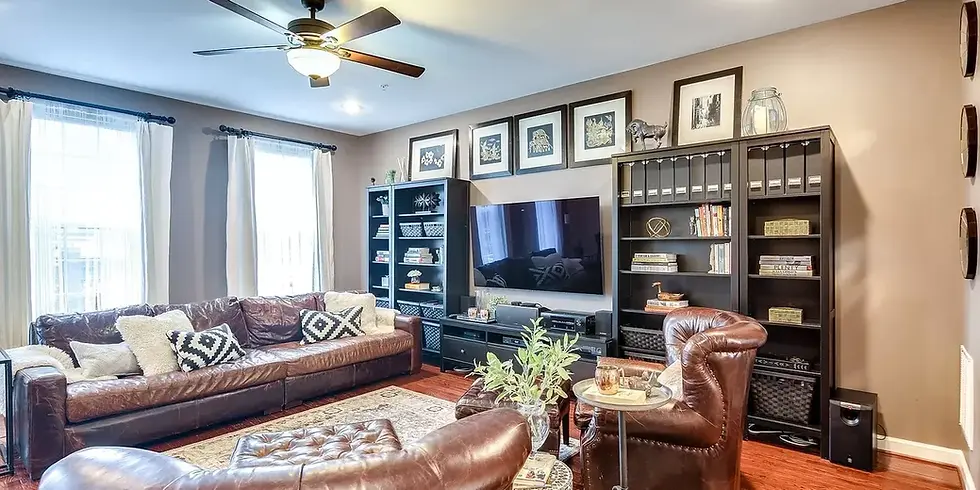
See below an example of occupied staging. Items were added but clutter and heavy furniture still exsists.
The biggest difference: control and consistency
The main advantage of vacant staging is control.
With a vacant home, every detail is curated to work together—from scale and layout to color palette and overall style. The home feels intentional and polished.
With occupied staging, you are blending existing furniture with staging pieces. This often results in a mix of styles, finishes, and proportions that can feel less cohesive.
Buyers may not consciously notice it, but they feel the difference.
Why vacant staging performs better
1. A stronger first impression
Vacant homes can feel cold and difficult to read. Staging transforms the space into something warm, welcoming, and easy to connect with from the moment buyers walk in—or see it online.
2. Better photos = more showings
Professional staging dramatically improves listing photos. Clean lines, balanced layouts, and a consistent aesthetic help your home stand out online, which drives more traffic and showings.
3. Defines the space clearly
Empty rooms can feel smaller or confusing. Staging shows buyers exactly how each space functions and helps them understand the layout at a glance.
4. Appeals to the target buyer
Vacant staging allows us to design specifically for the price point and buyer demographic of the home, creating a look that feels current and relevant.
The limitations of occupied staging
Occupied staging can be helpful in some situations, but it comes with limitations:
Existing furniture may not fit the scale of the home
Styles and finishes can feel mismatched
Personal items can distract buyers
The overall look is harder to elevate to a fully polished level
Even with thoughtful adjustments, it rarely achieves the same impact as a fully staged vacant home.
Our approach
At Times Ten Design, we specialize exclusively in vacant home staging.
We’ve found that fully staged homes create the strongest visual impact, photograph the best, and consistently present at a higher level. It allows us to design with intention, create a cohesive look, and give each home the best possible chance to stand out in the market.
The bottom line
If you’re looking for the most effective way to present your home, vacant staging offers a clear advantage. It removes distractions, creates a cohesive design, and helps buyers immediately see the potential of the space.
In a competitive market, that difference matters. See our portfolio here to see the magic!


bot4x.io dạo này mình thấy nhiều người nhắc nên cũng ghé thử cho biết, chủ yếu xem họ làm web kiểu gì chứ không đào sâu. Vào cái là thấy bố cục khá dễ chịu, chữ không dồn một cục nên lướt nhanh vẫn hiểu ý. Mình để ý họ cho phần giấy phép PAGCOR lên khá nổi, kiểu đặt ngay chỗ dễ nhìn chứ không giấu ở mấy trang con. Cách chia nội dung theo từng khung ngắn gọn nên đọc đỡ mỏi mắt, nhất là mấy đoạn nói về kiểm định RNG, nhìn như dạng box riêng nên cảm giác rõ ràng hơn. Menu cũng đơn giản, bấm qua lại không bị rối. Nói chung mình chỉ xem…
tỷ lệ bóng 88 hôm bữa mình lướt thấy người ta nhắc nên bấm vào coi thử cho biết. Ấn tượng đầu là trang nhìn khá gọn, kiểu ai vào cũng hiểu họ đang làm gì chứ không vòng vo. Ngay phần đầu có đoạn “Chào Mừng Đến WEbsite Của Chúng Tôi” giới thiệu họ chuyên tổng hợp đánh giá nhà cái và có cập nhật link mới khi bị chặn, đọc lướt là nắm ý. Mình không đọc sâu mấy bài hướng dẫn, chỉ kéo xuống xem bố cục thôi. Thấy họ chia nội dung thành mấy khối rõ ràng, nhìn phát biết đâu là phần review. Mấy ô “Review Visit” xếp theo hàng nên mắt không bị loạn,…